
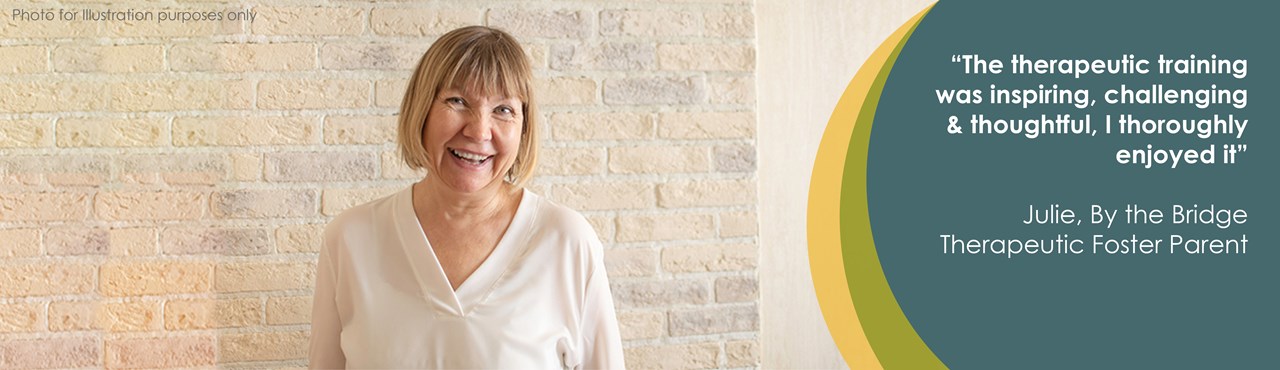
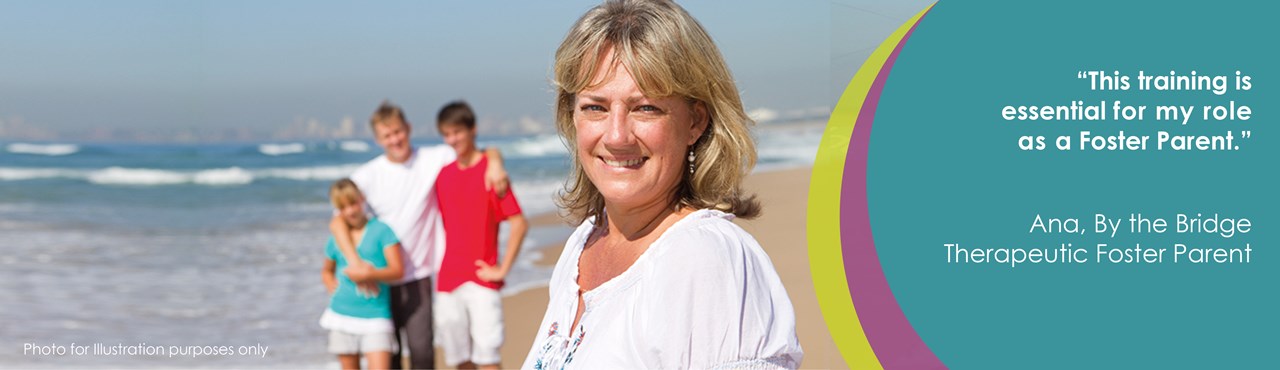

We seek to help our Foster Parents to understand their children’s lives and how it has impacted them.
Find out moreWhat is Therapeutic Fostering?
At By the Bridge we believe in a truly therapeutic approach and invest in developing highly skilled Therapeutic Foster Parents. Through a unique therapeutic parenting approach, our Foster families are able to offer our children the essential relational family environment and healing opportunity that they have missed.
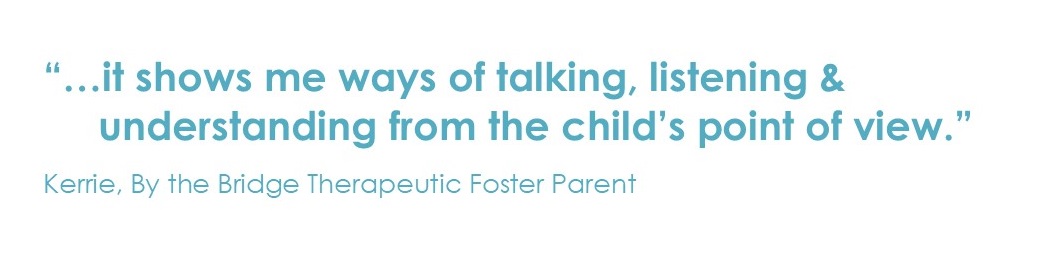
By placing children with carefully matched, therapeutically trained Foster families, we aim for our children to be given a healing experience that will help them to recover from the trauma that they have endured.
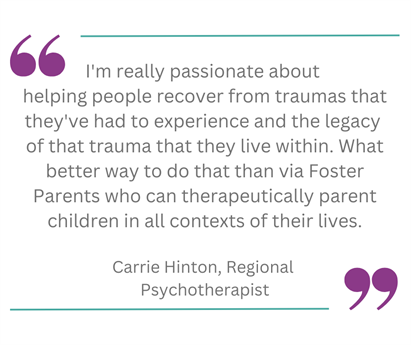
Our fundamental aim is to provide the very best opportunity for our children to feel safe; have healthy relationships; learn to trust the adults who care for them; heal and grow into emotionally, psychologically and physically healthy, happy individuals – free to thrive, and explore their hopes and dreams for the future.
Our Therapeutic Parenting approach requires a different approach to traditional parenting. It places important emphasis on deep nurturing and understanding; and is a skilful and unique way to parent children who have been impacted by experiences of trauma and adversity. As well as a comprehensive programme of Therapeutic Training as a By the Bridge Foster Parent you will be supported by a team of professionally trained psychotherapists, who along with our experienced Supervising Social Workers, branch teams and Education specialists EAGALs provide a complete support network to help you every step of the way.
Full Therapeutic Philosophy
The 'magic' of Therapeutic Fostering
We are By the Bridge. We are Therapeutic Fostering.